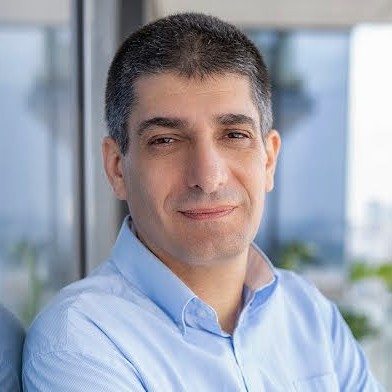
Zac Sadan

Zac Sadan

  • Lecturer, Graduate School of Business Administration, Bar-Ilan University
  • Co-founder & CTO, Protected Media (acquired by Mediaocean)

About

I am a researcher and lecturer working at the intersection of cybersecurity, machine learning and large-scale Internet systems. My research asks how we can detect malicious and automated activity on the web reliably, efficiently and with respect for user privacy — and how to measure what web platforms and AI models actually do in the wild.

I co-founded Protected Media, an ad-fraud and bot-detection company that was acquired by Flashtalking (now Mediaocean) in 2021, and served as its CTO, leading machine-learning systems that process tens of billions of requests per day. Earlier I co-founded a2z Technologies (IP acquired) and was Chief Scientist at Cyren, where I led research on anti-spam, phishing, botnets and text classification.

I hold a Ph.D. in Information Systems, an MBA and a B.Sc. in Computer Science, all from Bar-Ilan University. Since 2016 I have taught entrepreneurship and innovation workshops at Bar-Ilan’s Graduate School of Business Administration (EMBA, IMBA and MBA programs).
Research: Trustworthy AI and Internet Security at Scale

Robust detection of fraud and automated traffic

Detecting bots, AI agents, click fraud and network interception when the adversary adapts and ground truth is scarce. Behavioral signals, graph structure and network fingerprints, evaluated with leakage-aware benchmarks and operational metrics such as PR-AUC, false-positive rate at fixed recall, calibration and latency.

Reliable and efficient AI for content classification

When do small or in-browser models match large language models on safety-critical classification tasks such as brand safety and content taxonomy? Cascades, selective prediction and calibration — with cost per million decisions as a first-class metric — and keeping decisions stable as taxonomies and models change.

Web platform and privacy-aware measurement

What browser APIs, passive microbenchmarks and capability declarations actually reveal, and how much data detection really needs. Controlled lab studies with known devices, audits of public code, and the accuracy–privacy trade-off of measurement on the open web.

I would love to collaborate on research in any of these areas — please get in touch.

Open image